by Talal Khan May 14,2025
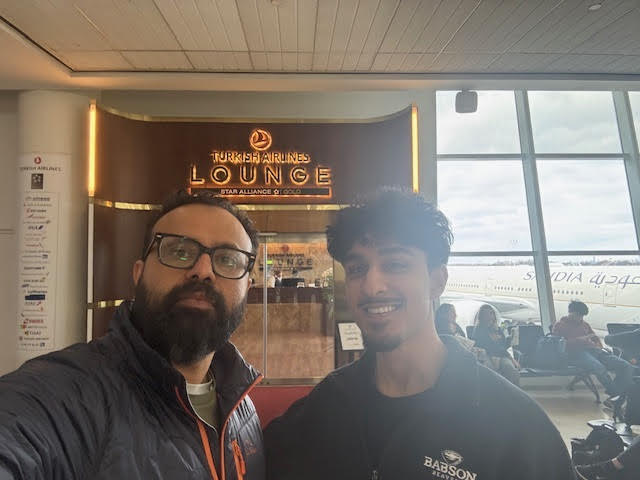
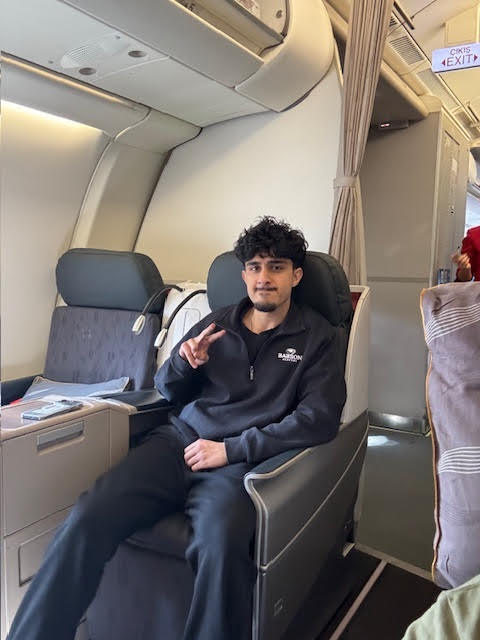
As the holy month of Ramadan unfolded, it brought with it a journey unlike any other—a journey of self-discovery, spiritual growth, and father-son bonding. My 18-year-old son, Sarim Khan, had approached me just before the start of Ramadan with a request: to travel to Medina and Mecca to elevate his spiritual connection. With the clock ticking and my passport nearly expiring, everything fell into place thanks to the efforts of Sara International Travel. Business class flights on Turkish Airlines brought us to Medina, and from there, our journey unfolded with moments that would change us forever.
A Spiritual Awakening in Medina: Meeting Muhammad (PBUH)
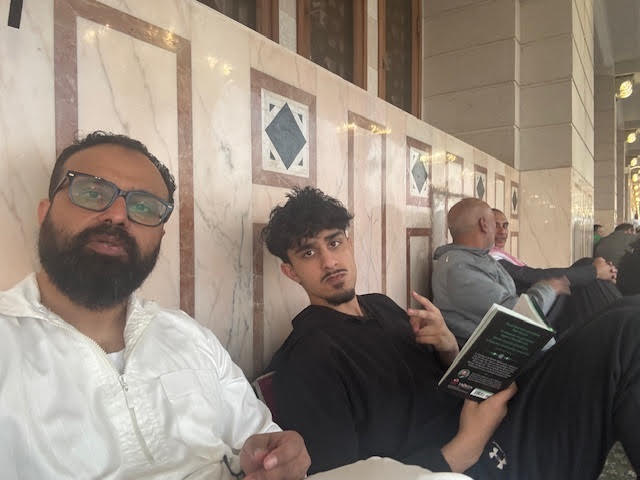
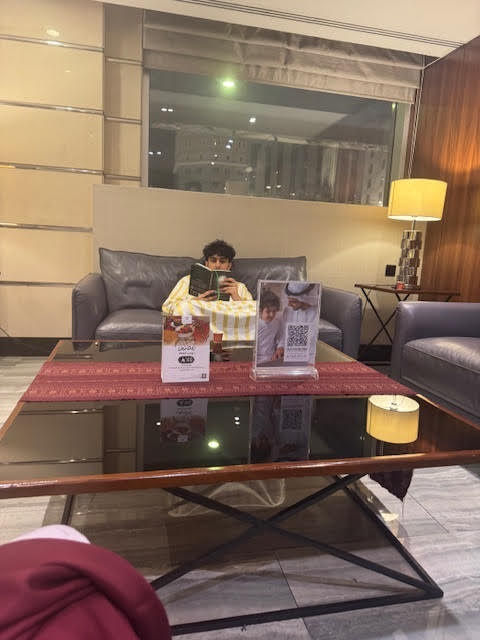
One of the most profound experiences of our trip occurred during our time in Medina, where Sarim had the opportunity to delve deeper into the life of Prophet Muhammad (PBUH). During our stay in this sacred city, he picked up the book Meeting Muhammad by Omar Sulaiman. This book, which focuses on the Prophet’s character and his interactions with those around him, truly opened Sarim’s eyes to the humanity of Muhammad (PBUH) and the principles he lived by.
Muhammad’s Interaction with His Followers
As Sarim read Meeting Muhammad, he was struck by the way the Prophet Muhammad (PBUH) interacted with his companions. The Prophet (PBUH) was not just a leader but a man who treated everyone, regardless of their social status, with kindness and respect. Sarim found it remarkable how the Prophet made time for every person, whether they were rich or poor, powerful or humble. He was always approachable and never turned anyone away. His humility and ability to listen to others, especially when they sought advice, left a lasting impression on Sarim.
The book also illuminated the deep love and respect that the Prophet’s companions had for him, not just because of his position but because of his gentleness, wisdom, and compassion. Sarim came to understand that true leadership, as exemplified by the Prophet (PBUH), is rooted in humility, empathy, and genuine concern for others. This was something Sarim aspired to emulate in his own life.
The Prophet’s Relationships with His Wives
Another aspect of Muhammad’s life that Sarim was deeply moved by was the way he treated his wives. Despite the many responsibilities and challenges he faced, the Prophet Muhammad (PBUH) was known for being a loving and attentive husband. Sarim learned that the Prophet’s relationships with his wives were built on mutual respect, kindness, and understanding.
In particular, the Prophet’s treatment of his first wife, Khadijah (RA), was a testament to his character. He was profoundly loyal and respectful toward her, even after her death, and his love for her never waned. When Sarim read about how Muhammad (PBUH) would often remember Khadijah with fondness and speak of her with honor, he gained a new appreciation for the importance of love, loyalty, and respect in marriage.
Sarim also learned about the Prophet’s relationship with his other wives and how he balanced his responsibilities to each of them. He treated them with fairness, love, and care, always striving to maintain harmony within the household, despite the challenges of multiple marriages. This was an important lesson for Sarim—how love and respect for family are essential components of a righteous life.
The Prophet’s Interaction with Children
Sarim was particularly touched by how the Prophet Muhammad (PBUH) interacted with children. The Prophet (PBUH) had a deep affection for children and always treated them with kindness and gentleness. He would often play with children, engage with them, and give them his full attention. Sarim was amazed by how, even as a leader with a heavy responsibility, the Prophet (PBUH) never overlooked the importance of nurturing and caring for the younger generation.
Through the stories in Meeting Muhammad, Sarim began to understand that being kind and loving to children was an important part of emulating the character of the Prophet (PBUH). Muhammad’s interactions with children were not just about affection, but about teaching them, guiding them, and showing them the value of kindness, respect, and faith. This resonated deeply with Sarim, who felt inspired to adopt the same patience and compassion when interacting with younger siblings and peers.
Living in Poverty
One of the most striking aspects of Prophet Muhammad’s life was his simplicity and humility, particularly in how he lived. Despite being a Prophet and a leader of a growing community, Muhammad (PBUH) lived in relative poverty. His home was modest, and he had very little in terms of material wealth. Sarim was deeply moved by the fact that the Prophet (PBUH) did not seek luxury or riches, even though he had the power to do so.
Instead, the Prophet Muhammad (PBUH) chose to live a life of asceticism, prioritizing his relationship with Allah and the well-being of his community over worldly comforts. Sarim reflected on how the Prophet’s poverty was a testament to his unwavering faith in Allah and his dedication to living a life of sincerity and sacrifice. This lesson on simplicity and humility had a profound impact on Sarim, helping him realize that true wealth is not measured by material possessions, but by one’s closeness to Allah and the goodness of one’s character.
How the Prophet Dealt with Anger
Another important lesson Sarim learned from Meeting Muhammad was how the Prophet Muhammad (PBUH) dealt with anger. In contrast to how many people today might react in moments of anger, the Prophet (PBUH) is described as having a calm and composed demeanor. He would often advise his companions to refrain from getting angry and would remind them that anger could lead to actions that went against the teachings of Islam.
Sarim read about how, even in the most frustrating and challenging situations, the Prophet (PBUH) would maintain his composure and find peaceful ways to resolve conflicts. This was especially striking to Sarim because, as a teenager, he was often grappling with his own emotions and struggles with self-control. Learning about the Prophet’s ability to manage anger, Sarim was inspired to adopt more patience and practice self-restraint in his own life.
The Prophet’s Sense of Humor
Another aspect of the Prophet’s character that Sarim found both surprising and refreshing was his sense of humor. While the Prophet Muhammad (PBUH) was a man of great seriousness and responsibility, he also knew how to make others smile. He had a gentle and light-hearted sense of humor, and he often made his companions laugh in a way that was always appropriate and never hurtful.
Sarim learned that humor, when used correctly, can be a means of bringing joy to others and building bonds of friendship and affection. The Prophet (PBUH) showed that it was important to balance seriousness with light-heartedness, creating an atmosphere of warmth and positivity.
The Prophet’s Death
As Sarim continued to read Meeting Muhammad, he eventually came to the part of the book that detailed the final days of the Prophet Muhammad’s life. The story of his passing was a deeply emotional moment for Sarim, as he learned about the tremendous loss the companions felt and the legacy the Prophet (PBUH) left behind.
Despite his illness, the Prophet Muhammad (PBUH) continued to advise his companions, emphasizing the importance of following Allah’s guidance and staying united in faith. Sarim was deeply moved by how the Prophet (PBUH) remained steadfast in his mission until the very end. His death marked the end of an era, but his teachings and example continue to inspire millions around the world.
For Sarim, the story of the Prophet’s death was a reminder of the transient nature of life and the importance of living each day with purpose and sincerity. It also deepened his admiration for the Prophet Muhammad (PBUH) and the enduring impact of his life.
Through reading Meeting Muhammad in Medina, Sarim not only learned about the life of the Prophet Muhammad (PBUH), but he also gained insight into how to live a life filled with kindness, humility, patience, and wisdom. The book brought the Prophet’s character to life in a way that resonated deeply with Sarim, inspiring him to strive for the same qualities in his own life.
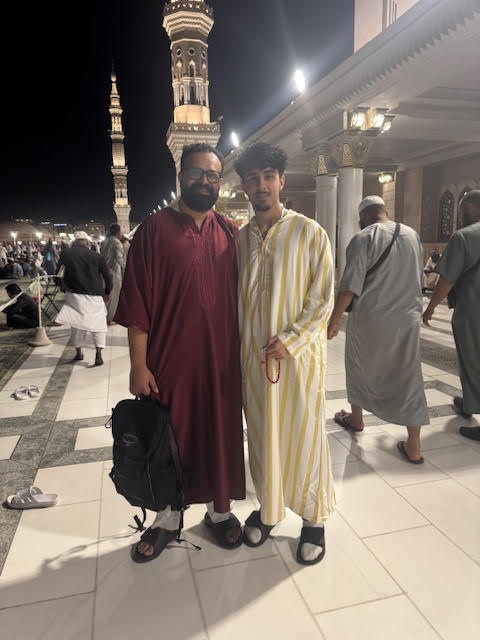
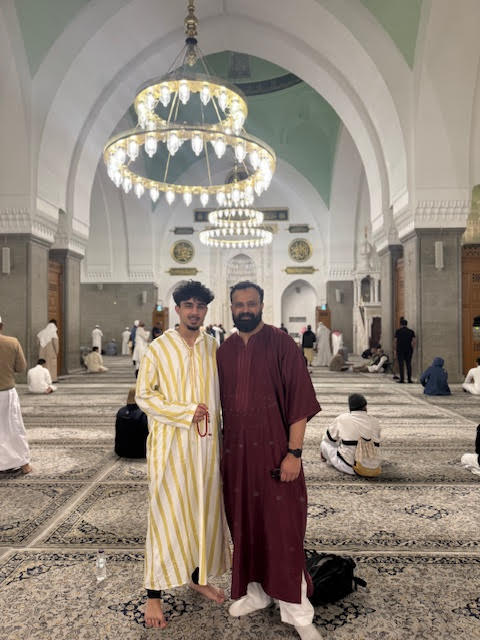
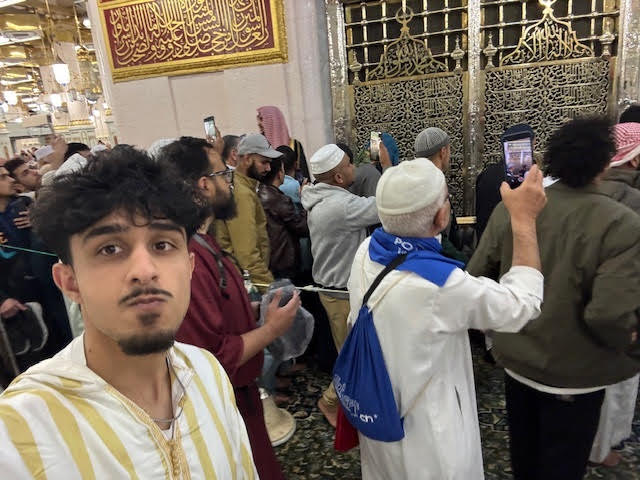
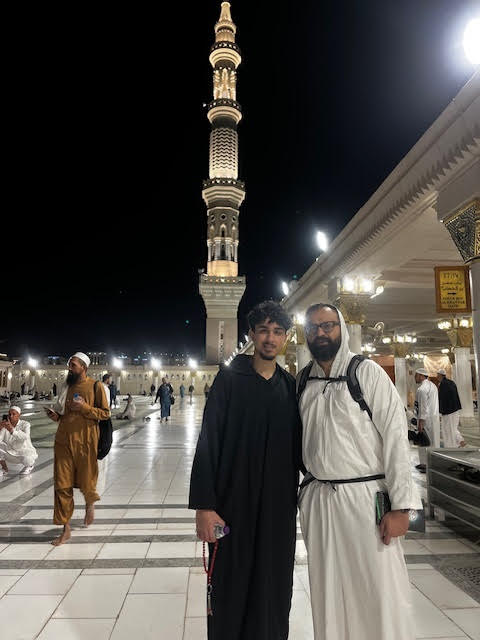
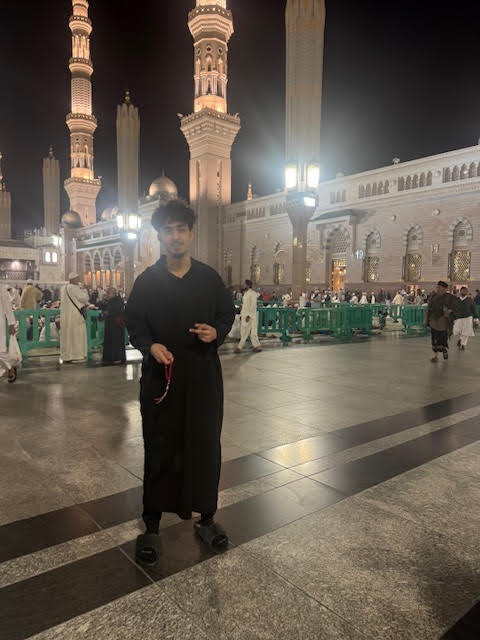
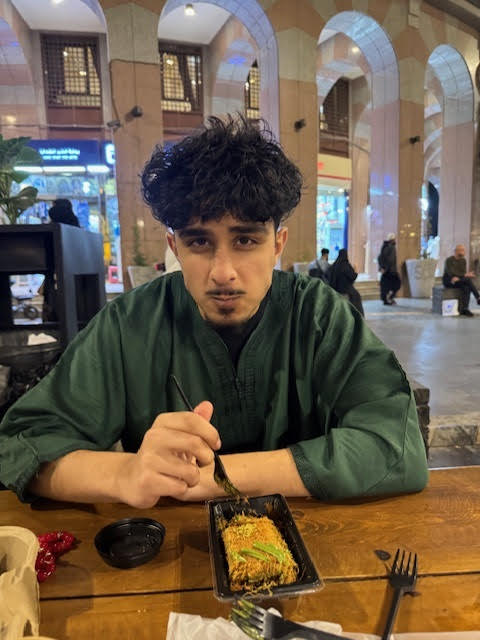
We did not have a lot of time in Medina but were able to do a lot. We tried street food with Italian Pizza and cheese Kunafa being the stars of the who trip. We also walked to masjid-e Quba, the first mosque built in Islam. As we followed in the footsteps of the prophet, we could not help but notice how quickly Medina was growing. The nice night breeze kept us cool as we did 2 Nawafil in the mosque to get the reward of a full umrah. We took golf carts back and were able to keep our appointment for the Rawda of Hazrat Muhammad PBUH where we paid our salams and that of our family.
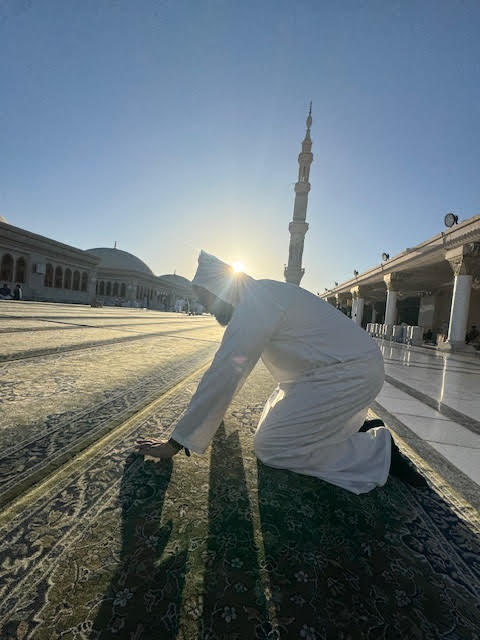
As we left Medina and continued our journey to Mecca, Sarim’s heart was filled with a newfound love and respect for the Prophet Muhammad (PBUH). The lessons he learned in Medina would stay with him, guiding him as he continued to navigate his own path of spiritual growth and self-discovery.
Sarim’s Spiritual Growth in Mecca
After spending a few days in Medina, we journeyed to Mecca, the heart of Islam. It was in Mecca that Sarim picked up another transformative book: Allah Loves, also by Omar Sulaiman. This book had a profound impact on Sarim’s spiritual journey, particularly with its exploration of the attributes that Allah loves in His believers.

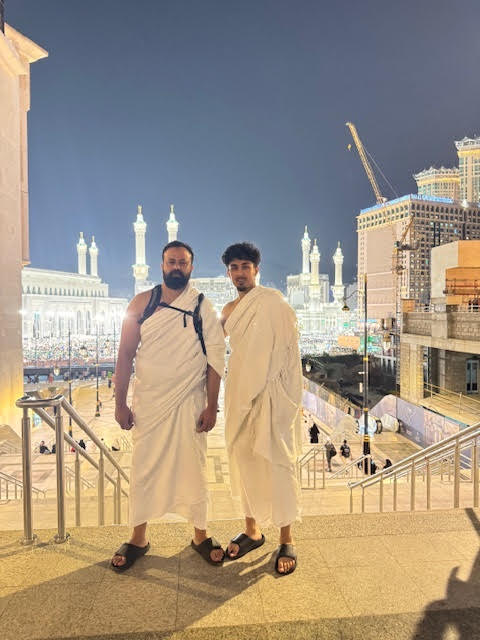
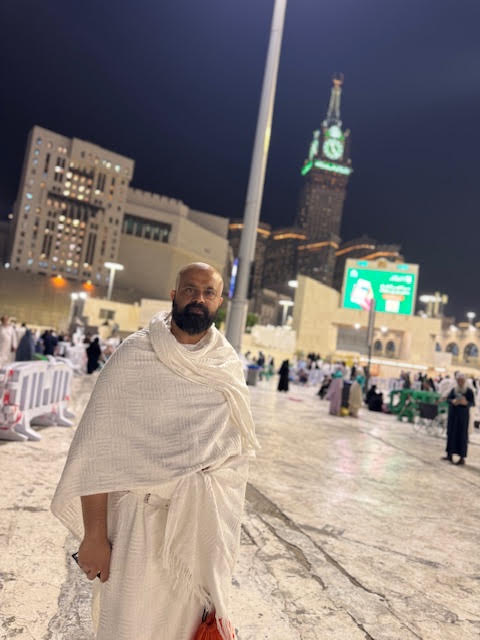
One of the key themes in Allah Loves is the concept of Taqwa, which refers to God-consciousness and mindfulness of Allah in every aspect of life. Taqwa is the foundation of a strong spiritual connection—it means living with an awareness of Allah’s presence and making choices that reflect this awareness. Sarim found the idea of Taqwa compelling, and it gave him a deeper understanding of how to lead a life that aligns with Allah’s expectations.
Another essential attribute discussed in Allah Loves is Excellence or Ihsan. Sarim was particularly struck by the concept of striving for excellence in everything—whether it’s in worship, work, or relationships. Ihsan, according to the teachings in the book, is about seeking to perfect one’s actions, doing things not just for the sake of doing them, but for the sake of pleasing Allah. Sarim came to understand that striving for excellence wasn’t about worldly perfection but about performing everything to the best of one’s ability with sincerity and devotion.
The book also explored the real meaning of God-fearing. Sarim had often heard the term, but it wasn’t until reading Allah Loves that he understood its deeper meaning. Being God-fearing isn’t about living in fear of Allah, but it’s about respecting Allah’s greatness and power, being in awe of His mercy, and acknowledging His authority in every aspect of life. This understanding resonated deeply with Sarim, who began reflecting on how he could develop a greater sense of humility and reverence in his daily life.
Perhaps the most profound lesson Sarim took from Allah Loves was about the benefits of sincere repentance. The idea that no matter how far one may stray, Allah’s mercy is always within reach through sincere repentance was both comforting and motivating for him. Sarim realized that true repentance wasn’t just about asking for forgiveness in moments of guilt but about genuinely feeling remorse for past wrongs, making a commitment to change, and actively seeking to live in accordance with Allah’s commands. This realization had a lasting impact on Sarim, who felt encouraged to strive for self-improvement, knowing that Allah’s mercy is endless.
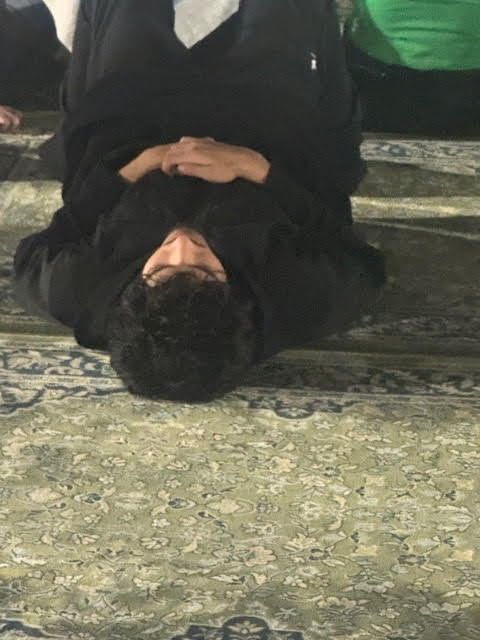
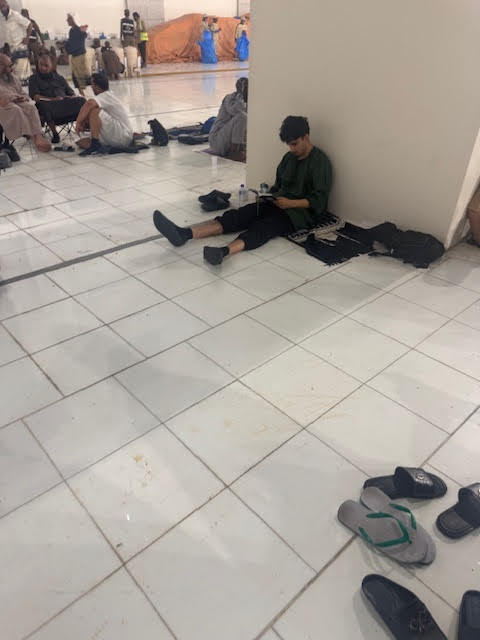
Every evening after Maghrib, while waiting for Taraweeh, Sarim would read Allah Loves. It became part of his routine, a time of quiet reflection and learning. He would often lay down on the floor, gazing up at the sky in Medina and Mecca, as if daydreaming, but in those moments, his mind was far from idle. It was as if his thoughts were drifting into the spiritual lessons he was absorbing, processing them with a sense of peace and gratitude. In those moments, I would glance over at him and see the quiet transformation taking place. He was not just learning about Allah; he was internalizing those lessons and embodying them in his heart.

Shared Moments of Connection
In Mecca, as we stood side by side in the Haram, performing Tawaf and praying together, something magical happened—not just for us, but for the many Muslims we encountered from around the world. We’d exchange smiles and words of Salaam with random strangers, all of us united in the same faith. No matter where they were from—Indonesia, Saudi Arabia, Pakistan, or beyond—it felt like we were all part of a vast, spiritual family. It was a humbling reminder of how faith transcends borders and brings us together as one Ummah.
We also shared simple pleasures, which became some of our most cherished moments. Sitting together after a long day of worship, we enjoyed humble meals of bread, yogurt, dates, and the purest drink on earth—Zamzam water. These small moments of togetherness, sharing what little we had, felt like acts of devotion themselves. We often spoke about how such simple foods—bread and yogurt—could taste so much sweeter in the holy land, as if each bite was a reminder of Allah’s blessings.
The Blessing of Zamzam Water
Zamzam water, which flows from the well of Zamzam located within the Masjid al-Haram, holds great significance for Muslims. It is believed to be a miraculous source of water, gifted to Hagar (Hajar), the wife of Prophet Ibrahim (PBUH), and their son Ismail (PBUH) when they were left in the desert. The well of Zamzam is considered one of the greatest gifts Allah has given humanity.
Before drinking Zamzam water, it is recommended to recite a short dua:
Dua before drinking Zamzam water:
“اللهم إني أسالك علماً نافعا، ورزقاً واسعاً، وشفاء من كل داء”
(O Allah, I ask You for beneficial knowledge, abundant sustenance, and healing from every disease.)
The ritual of drinking Zamzam water, with its history and sacredness, added a profound dimension to our experience. As we drank, we felt connected to the past—to the miracles of Hagar and Ismail (PBUH), to the thousands of years of Muslims who had stood in the same spot, drinking the same water, and making the same supplications. Each sip felt like a reminder of Allah’s mercy and blessings.
Life in Mecca: A Spiritual Energy Like No Other
Mecca is a city like no other. It is always bustling, filled with worshippers from all corners of the world. Whether it’s the constant hum of prayers, the crowds of people walking to and from the Haram, or the vendors selling their goods, Mecca is alive with energy at all times. There is no “quiet” hour; the city never sleeps, and the Haram never empties. But amidst all the hustle and bustle, there is a sense of peace that prevails—a peace that comes from knowing you are in the presence of Allah’s most sacred sanctuary.
Every day, we would return to the rooftop of the Haram, where we could enjoy the view of the Kaaba while performing the night prayers. There, under the stars, we could feel the weight of the moment—the weight of being in the place where all our prayers are answered, where our supplications are heard. It was on these rooftops that Sarim and I would reflect on the lessons we were learning—about Taqwa, Ihsan, repentance, and the mercy of Allah.
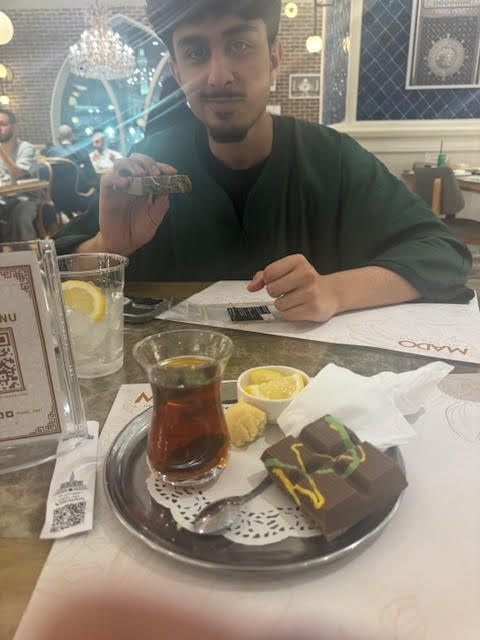
In between our spiritual activities, we also found time to explore the city. We enjoyed the convenience of food from home, such as Hardy’s and KFC, moments that felt surprisingly comforting amidst the intensity of the pilgrimage. Mecca, with its constant energy, is a city that has something for everyone, but the true nourishment lies in the connection to Allah and the experiences that deepen our faith.
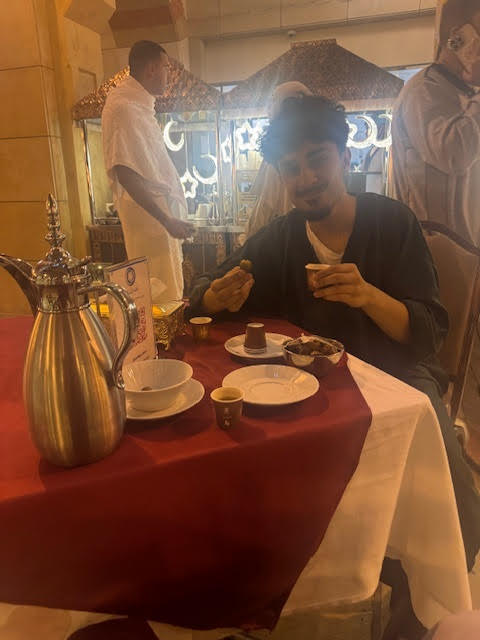
The last fews days merged into each other as we spent most of the time in prayer and reflection. However, we did find time to shop and explored some local cafes. A word about our Hotel. This is a newer version of Jabal Umar with its twin tower connected together overlooking the Haram and the highest musallah at the 36th floor giving you panaromic vews of Mecca and Masjid-e-Haram. I did get a chance to do a few Asr prayers there. Its a modern hotel slightly away from the hustle of the city. It has one of the cleanest lobby and the cafe served delicious Arabic tea, a mean Club sandwitch and great hot appetizers. Also great was the walk to our previous hotel and its oudoor cafe, Hotel Anjum. The ambivance is relaxing and comfort food is decent especially the dates that come with Arabic coffee.
As our time in Mecca came to a close, we both felt the profound impact this journey had on us. For Sarim, this trip was not just about physical rituals—it was about discovering the core of his faith, learning to live with mindfulness of Allah, striving for excellence, and understanding the transformative power of repentance. His experiences in Mecca, reading Allah Loves, and reflecting on the teachings of Omar Suleiman, deepened his connection to Allah in ways I could never have imagined.
For me, it was a reminder that the journey of faith is never-ending. To see my son on his own path to spiritual maturity was a gift I will treasure forever. Our time in Medina and Mecca strengthened not only our bond as father and son but also our individual relationships with Allah.
This journey will stay with us for the rest of our lives, guiding us in every step we take, and I pray that we continue to carry the lessons learned in these sacred cities throughout our lives.
 westernmassoutdoors